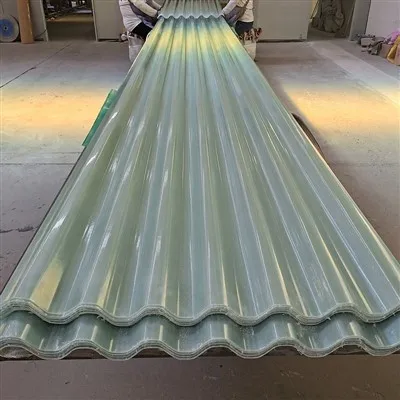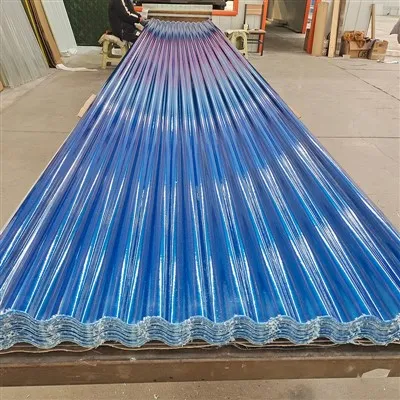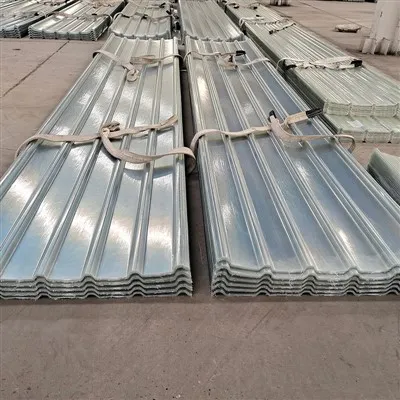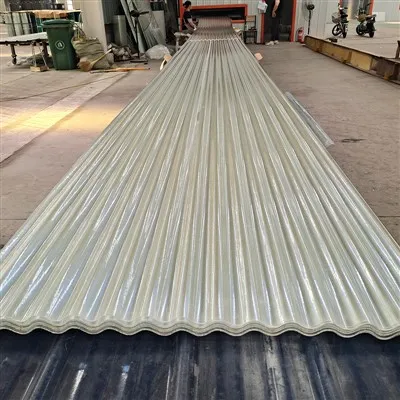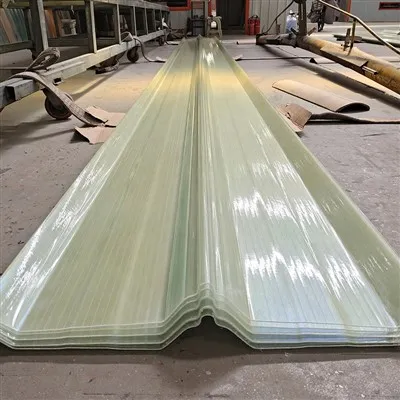


Handan Donghong Fiberglass & Color Steel Manufacturing Co., Ltd. is one of the leading manufacturers and suppliers of frp skylight panel in China. If you're going to wholesale cheap frp skylight panel made in China, welcome to get quotation from our factory. All customized products are with high quality and competitive price.
Product Definition
FRP Skylight Panel are daylighting materials designed for use with steel structures or as standalone roofing/cladding elements. They are primarily composed of an anti-aging surface film, specialized unsaturated resin, and high-quality fiberglass. Years of use have proven the product's stable quality and durability; it offers excellent cost-performance and is highly popular among customers, finding widespread application in roofing, wall daylighting, corrosion protection, and thermal insulation for various industrial and civil buildings.
Basic Specifications
|
Thickness |
0.8mm / 1.0mm / 1.2mm / 1.5mm / 2.0mm(conventional) |
|
|
Common Profiles (Compatible with color steel tiles) |
Type 840 |
Wave height 21 mm, wave pitch 210 mm, effective width 840 mm (standard for industrial buildings) |
|
Type 900 |
Wave height 16 mm, wave pitch 225 mm, effective width 900 mm (greenhouse/station) |
|
|
Model 760 / Model 470 (Standing Seam / Snap-Lock) |
Suitable for long-span roofs |
|
|
Length |
Standard 6m; custom cutting available. |
|
|
Weight |
About1.8–3.2 kg/m² (depending on thickness) |
|
Optical properties
|
Light transmittance |
25%–90% (transparent ≈85%, milky white/blue-green ≈50%–75%) |
|
Light |
Diffused, soft, and glare-free |
|
UV resistant |
Blocks ≥99% of UV rays |
Mechanical properties (National Standard GB/T 14206)
|
Tensile strength |
≥84–177MPa |
|
Flexural strength |
≥125–200MPa |
|
Impact resistance |
Does not crack when a 1kg steel ball is dropped from a height of 5 meters; 250 times stronger than ordinary glass. |
|
Operating temperature |
-40°C to +120°C (some models: -60°C to 140°C) |
|
Coefficient of thermal expansion |
≈1.5×10⁻⁵/°C (close to that of steel) |
|
Flame-retardant |
F1 (Oxygen Index ≥30%) / F2 (≥26%) |
|
Service life |
15–25 years (high quality) |
Features
High Light Transmission & Diffusion
Ample natural light; soft and glare-free
Lightweight & High Strength
Density of approx. 1.5 g/cm³ (half that of glass); resistant to wind, snow, and hail
Weather & Corrosion Resistance
Resistant to acids, alkalis, and salts; rust-proof and anti-aging
Excellent Thermal Stability
No deformation or embrittlement under high or low temperatures
Easy Installation
Cold-bendable and easy to cut; compatible with standard color steel sheet profiles
Energy Efficiency & Cost Savings
Reduces energy consumption for lighting and HVAC; long service life with minimal maintenance
Product Performance
Mechanical Properties
Reinforced with high-performance E-glass fiber, the product exhibits excellent impact resistance and flexural strength, withstanding hail and typhoons without becoming brittle or cracking.
01
Light Transmission
With a light transmission rate ranging from 25% to 90%, specialized manufacturing technology softens incoming light to create a comfortable working environment. As a non-homogeneous composite material, it diffuses light, ensuring uniform indoor illumination free from harsh spots or glare. (Manufactured using premium raw materials and optimized processes.)
02
Thermal Stability
These high-quality daylighting panels have a thermal expansion coefficient of 2.5–3.2 × 10⁻⁵ m/m/°C. This is closer to that of steel than PVC or PC, thereby reducing stress caused by temperature fluctuations and minimizing the risk of leaks at connection points.
03
Weather Resistance
The surface is coated with premium weather-resistant gel coat or a high-performance weather-resistant film. Specialized UV absorbers are incorporated to filter out over 99% of ultraviolet rays, slowing material degradation and discoloration while enhancing aging resistance.
04
Flame Retardancy
Various formulations allow for excellent flame-retardant properties that meet international standards (Class I flame-retardant panels: OI ≥ 30; Class II flame-retardant panels: OI ≥ 26).
05
Production Process (Continuous Molding)
1. Ingredient Preparation: Unsaturated resin + curing agent + additives + color paste
2. Bottom Film Coating: Film + uniform resin application
3. Fiber Laying: Uniform placement of chopped strand mat/fiberglass yarn
4. Top Film Lamination & Air Removal: Compression of top and bottom films to eliminate air bubbles
5. High-Temperature Curing: 140°C oven curing; degree of cure ≥95%
6. Forming: Corrugated molding
7. Cutting & Packaging: Cut to length; water-free and dust-free process
FRP Skylight Panel Production Process
Enclosed automatic material feeding → Batching → Mixing → Resin content control → Reinforcement/resin lay-up → Graduated impregnation → Defect removal → Curing/molding → Post-curing → Cooling → Haul-off → Edge trimming → Automatic cutting → Product inspection → Finished product warehousing
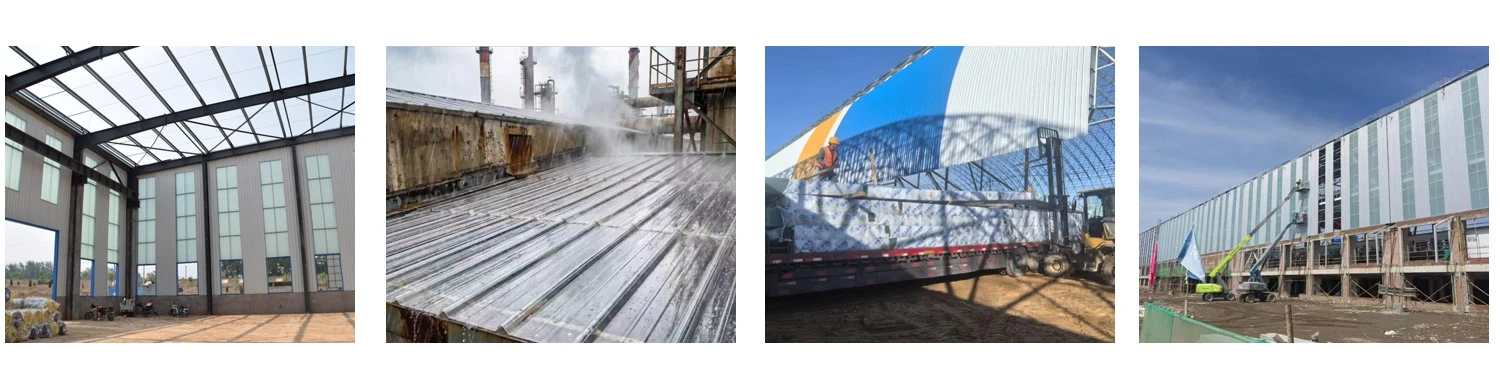
Application Scenarios
Industrial Plants/Warehouses
Roof daylighting, energy efficiency, flame retardancy, corrosion resistance (chemical/electroplating)
Agricultural Greenhouses
High light transmission, diffused light, anti-drip properties, thermal insulation
Public Buildings
Daylighting roofs for stadiums, stations, and airports
Carports/Canopies/Shading
Residential complexes, factories, commercial walkways
FAQ
Q: Is FRP Skylight Panel compatible with standard color steel sheets?
A: Yes, 470/760 profiles match most roofing sheets for direct replacement.
Q: How long is the service life?
A: Normally 15 years with stable performance under outdoor exposure.
Q: Can it be used in corrosive environments?
A: Yes, it withstands acid, alkali, and salt spray without rapid decay.
Q: Is custom size available?
A: Yes, length, width, color, and thickness can be customized per project.
Q: What are the advantages of FRP skylight panels compared to other daylighting materials?
A: FRP skylight panels account for over 85% of installations in industrial plants. Their core advantages include: soft light diffusion without glare; diverse profiles that allow for easy overlapping with profiled steel sheets, ensuring good sealing and low leakage risk; a thermal expansion coefficient similar to that of steel sheets, making them more reliable when used together; strong self-cleaning properties that eliminate the need for manual cleaning; and excellent UV and aging resistance, maintaining high light transmission. In contrast, PC panels are prone to aging and yellowing and are difficult to seal during installation; PVC has poor weather resistance and is toxic; and glass has poor self-cleaning properties, is fragile, causes significant light pollution, and has high thermal conductivity. Overall, FRP offers superior comprehensive performance.
Q: Why use combustible skylight panels?
A: Most casualties in fires result from inhaling toxic smoke. When exposed to open flames during a fire, combustible skylight panels burn rapidly to create a smoke exhaust vent, quickly venting toxic, dense smoke and effectively protecting personnel at the scene from harm. Furthermore, FRP skylight panels are made of thermosetting material, so they do not produce burning droplets. Fire safety regulations require the roof daylighting area to be at least 8%, mandate that skylight panels be combustible, and require that the panels do not produce burning droplets when burning.
Q: How can the thermal insulation issue of skylight panels be addressed?
A: Thermal insulation can be achieved by using a double-layer configuration, which lowers the heat transfer coefficient to meet insulation requirements. Our company's double-layer panels can achieve a heat transfer coefficient of 2.5 W/(m²·K). These panels come in two types-composite and separated-to suit different roof structure requirements.
Q: Where are flame-retardant skylight panels primarily used, and what are their characteristics?
A: Applications: Steel mills, high-temperature blast furnace areas, and special locations involving flying sparks or requiring flame retardancy. Classification and characteristics: Class I flame retardancy (Oxygen Index ≥ 30); Class II flame retardancy (Oxygen Index ≥ 26). Due to the inclusion of flame-retardant additives, aging resistance is slightly reduced; Class I panels show yellowing after one year of use, while Class II panels yellow more easily and noticeably. Yellowing results in only a 3%–10% reduction in light transmission but does not affect mechanical strength or overall service life; the warranty terms remain unchanged. Conclusion: Flame-retardant daylighting panels are reliable and suitable for specific fire-safety applications; yellowing is a normal phenomenon and does not compromise operational safety.
Q: Why does uneven thickness occur in daylighting panels?
A: Our company manufactures daylighting panels in strict accordance with the GB/14206-2005 standard, which specifies a permissible thickness tolerance of ±10%. During the molding process, the resin is in a liquid state. Due to gravity, the material tends to be thinner at the corners of the corrugation crests; however, these variations remain within the ±10% tolerance limit. This variance does not affect the quality of our daylighting panels, and the product warranty remains unchanged.
Hot Tags: frp skylight panel, China frp skylight panel manufacturers, suppliers, factory, Anti corrosive FRP Transparent Sheet, corrugated fiberglass skylight panels, corrugated roof skylight panel, Fiberglass Translucent Sheet, Frp Corrugated Roofing Sheet, Industrial FRP Skylight Panels