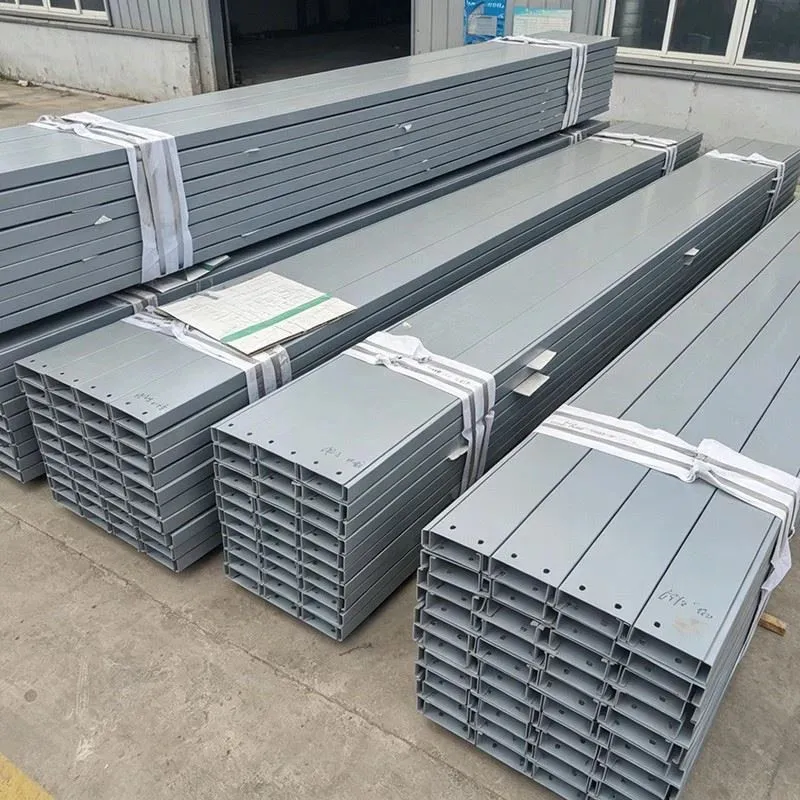
Dual Protection System: High-quality anti-corrosion powder-coated purlins typically employ a dual mechanism of "substrate corrosion protection + coating corrosion protection." The substrate (such as galvanized steel) provides high-quality cathodic protection (even with minor coating damage, zinc preferentially corrodes and protects the iron); the surface powder coating provides a robust physical barrier. Together, they significantly extend the overall corrosion resistance lifespan.
Key Coating Performance Indicators
Film Thickness Uniformity: Through electrostatic spraying, a uniform coating can be formed on complex cross-sections (such as the edges and corners of C-shaped and Z-shaped purlins), avoiding weak points.
Adhesion: The coating adheres firmly to the metal substrate, typically tested through cross-cut adhesion tests to ensure it is not easily peeled off.
Impact Resistance and Flexibility: Ensuring the coating can withstand certain external impacts and bending during processing and installation without damage.
Chemical Resistance and Salt Spray Resistance: Evaluating its durability in corrosive environments through accelerated aging tests in the laboratory (such as salt spray tests).
Durability and Economy: Although the initial investment may be slightly higher than that of ordinary galvanized purlins, their long maintenance cycle, reduced repair frequency, and lower replacement costs make them more economical from the perspective of the building's entire life cycle. Their aesthetic appeal also reduces the need for later maintenance of the building facade.