Metals, especially steel, face numerous challenges when exposed to the natural environment:
Moisture and Water: Rainwater and condensation directly contacting the metal surface are the primary conditions for electrochemical corrosion (rusting).
Corrosive Media: Industrial atmospheres, salt spray in coastal areas, and acid rain in some regions contain chloride ions and sulfides, which drastically accelerate the corrosion process of metals.
Ultraviolet Radiation and Temperature Difference: Long-term exposure to ultraviolet radiation from sunlight can cause some protective layers to age and powder; drastic temperature changes may cause micro-cracks due to the difference in expansion coefficients between the protective layer and the substrate.
While traditional hot-dip galvanized purlins offer some corrosion resistance, their protection period and performance may still be insufficient in the aforementioned harsh environments or in situations requiring higher standards of building appearance and durability. Anti-corrosion powder coating is a significant upgrade based on this, offering multiple advantages:
Satisfactory Barrier Protection: The dense and complete coating formed by powder coating acts like a "protective suit," physically isolating the metal substrate from the external environment and effectively blocking the penetration of moisture, oxygen, and corrosive ions.
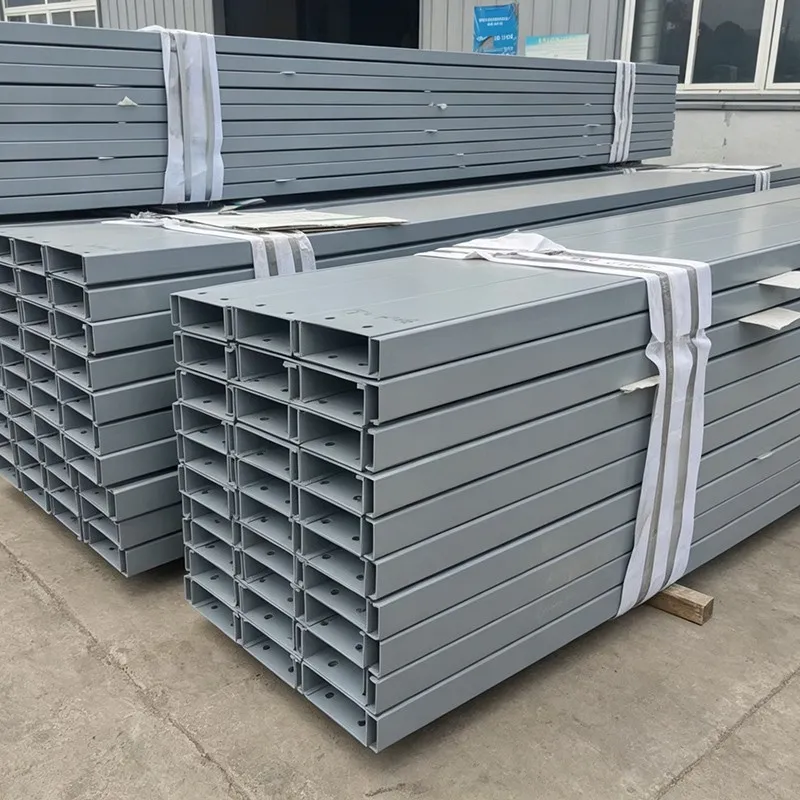
Excellent weather resistance: Specialized outdoor powder coatings (such as polyester-based ones) effectively resist UV radiation, maintaining color and gloss for a long time, and exhibiting strong resistance to chalking and aging.
Outstanding mechanical properties: The coating has strong adhesion to the metal substrate and good toughness, making it resistant to cracking or peeling during transportation, installation, or minor deformation.
Extensive decorative appeal: Powder coatings offer a wide range of color choices, allowing for customization to meet the overall design requirements of the building, making functional components an integral part of the building's aesthetic appeal.
Environmentally friendly: The powder used in the electrostatic spraying process is recyclable and produces virtually no volatile organic compounds, making it a relatively environmentally friendly surface treatment technology.